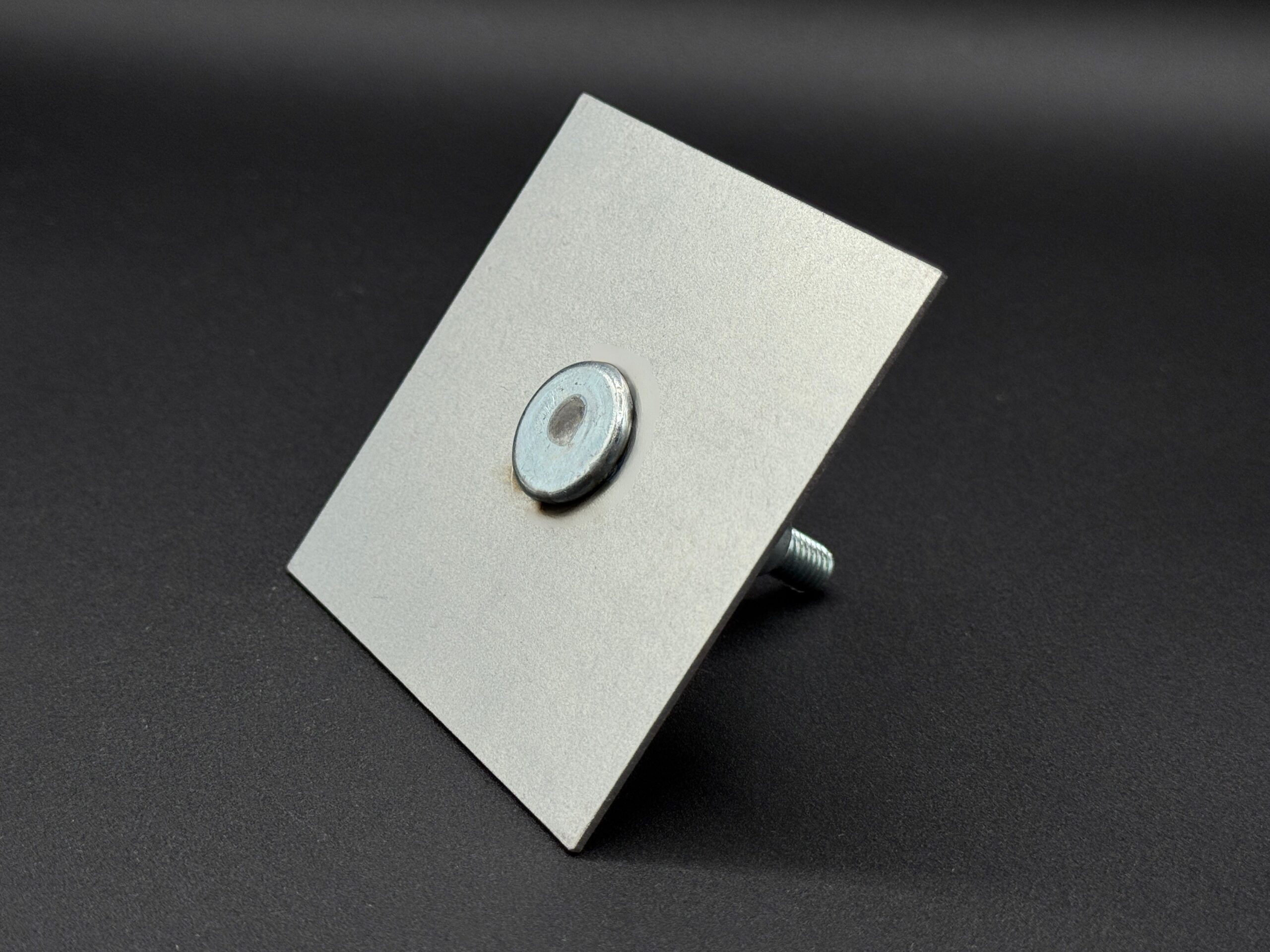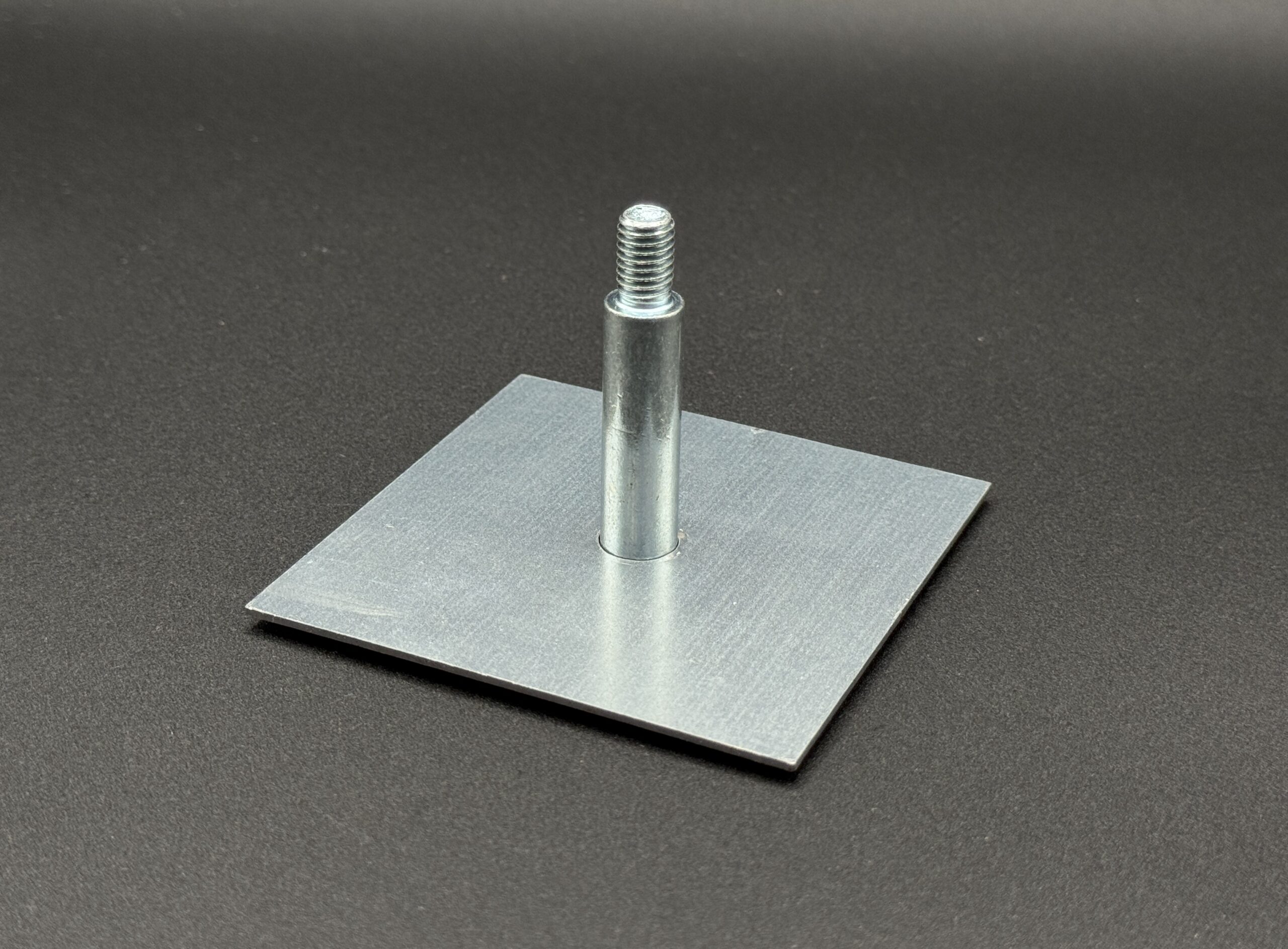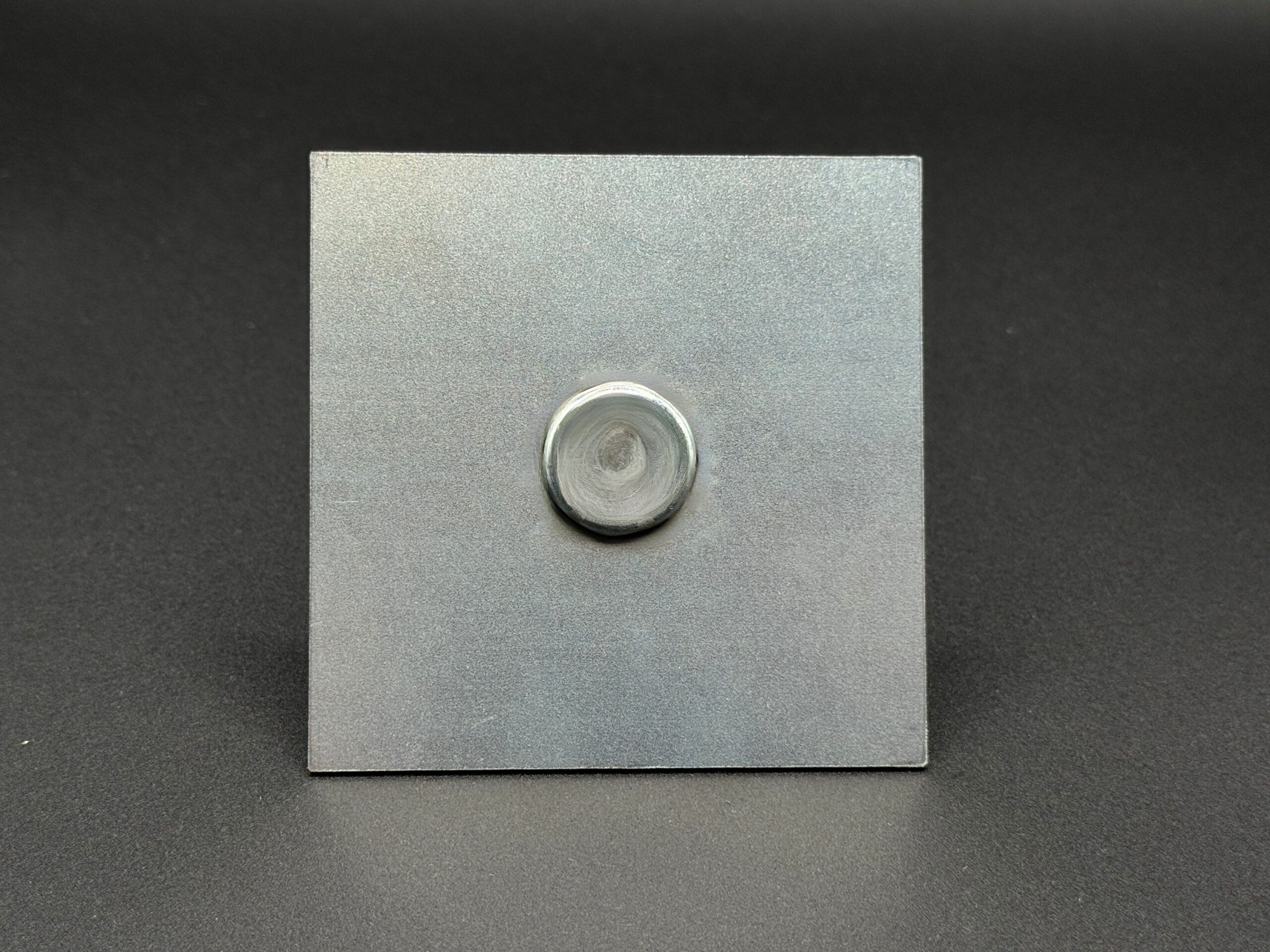
Resistance projection welding – Stud/Steel plate “Stud welding”
Optimize your HVAC assemblies with resistance projection welding
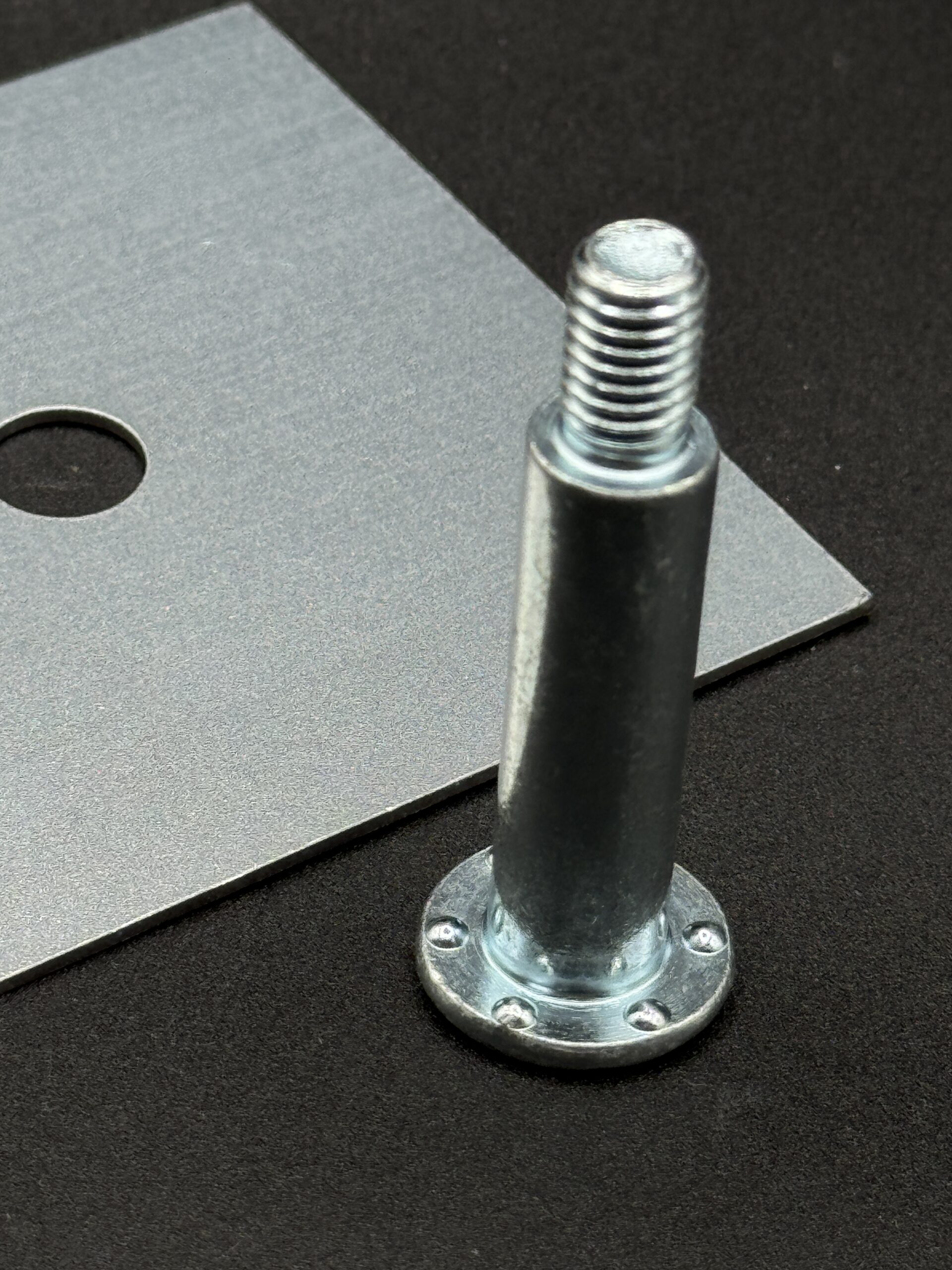
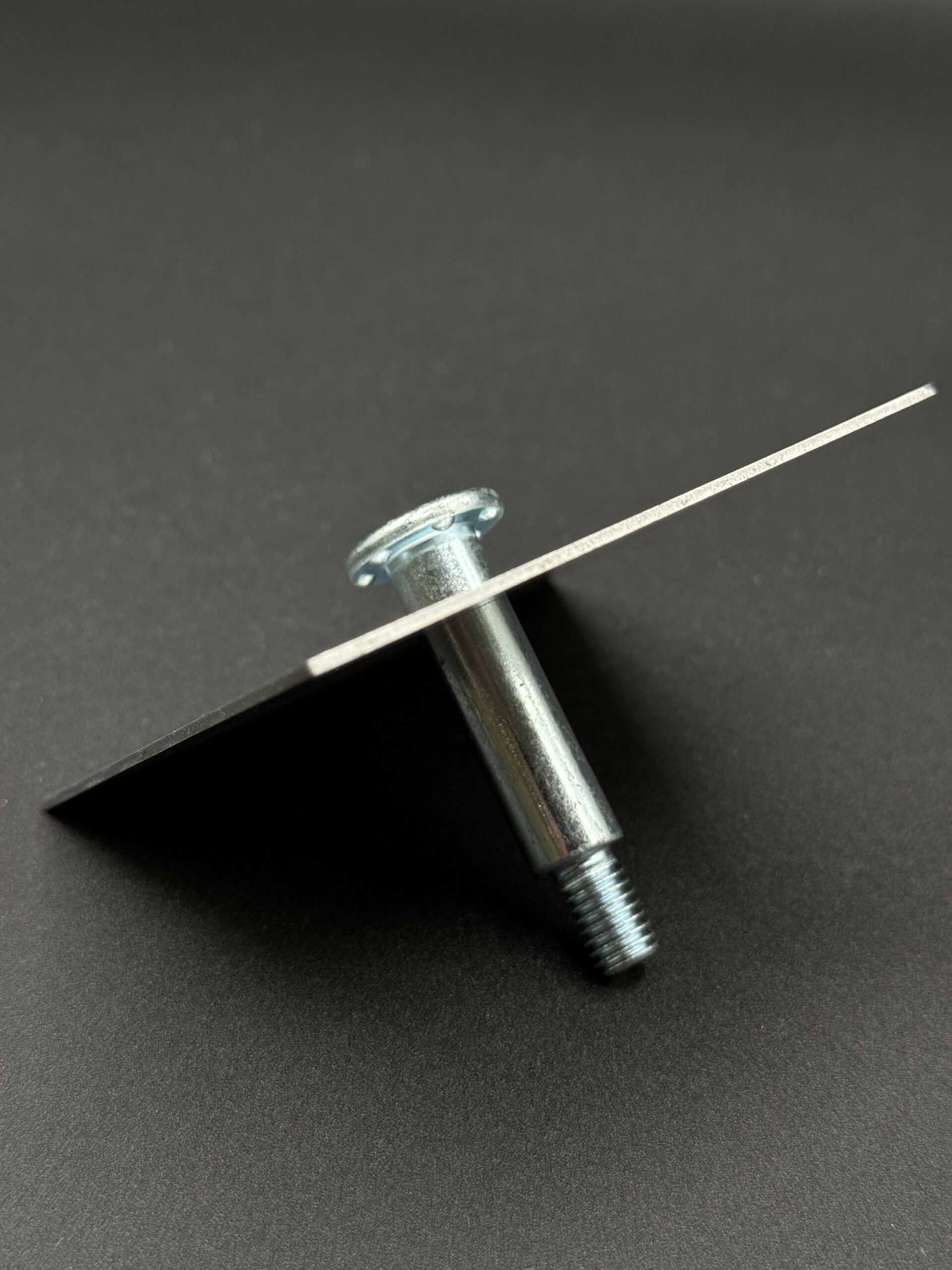
The Innovations & Prototypes department presents its latest achievement for the HVAC sector: a resistance projection welding operation of a stud onto a steel plate, commonly called stud welding.
What is projection welding?
Projection welding is a variant of resistance welding designed for parts that feature one or several raised contact points, known as projections. These small contact points concentrate the current to achieve a precise, strong and localised weld.
How does the process work?
1. Pressure application and current flow
Welding electrodes apply a controlled force to the parts. A high-intensity electrical current is then delivered through the assembly via the electrodes
2. Heat concentration on the projections
Because projections offer a smaller contact area, they create a higher local electrical resistance.
As a result, they heat up much faster than the surrounding material, becoming the precise initiation points of the weld.
3. Localized fusion of the projection
Under combined force and heat, each projection collapses and melts, forming a localized fusion zone at the interface of the parts.
4. Formation of the weld nugget
As the material solidifies, it forms a weld nugget* with homogeneous metallurgical continuity, ensuring a strong mechanical and electrical bond.
*A weld nugget is the small melted-and-solidified area created during resistance welding. It forms the welded joint.
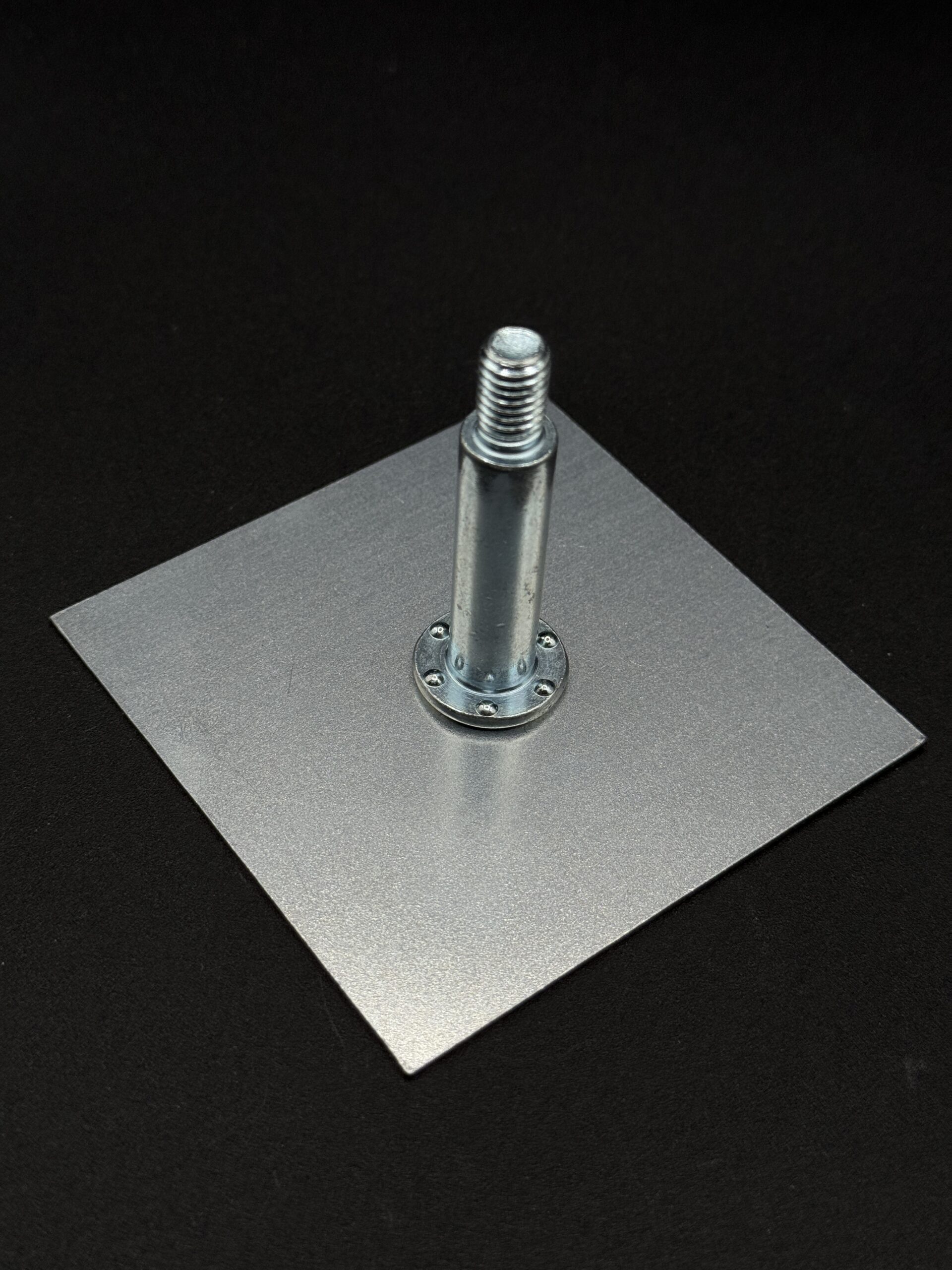
Pre-process
Why choose this process?
Projection welding offers several key advantages:
✔ High precision
Fusion occurs exclusively at the projection, within the heat-affected zone (HAZ), ensuring a clean and highly controlled weld.
Note: this process requires prior preparation of the part to form the projections
✔ Reduced electrode wear
Electrodes show reduced wear, particularly thanks to the flat upper surface of the steel plate.
✔ Lower consumable and energy usage
Projection welding does not require any solder, which limits the use of consumables to electrodes only! This simplifies the assembly process and reduces overall energy consumption.
Post-process